By Grace Turner
Trapped inside nutrient-starved abyssal clay since the dinosaur era, microscopic marine organisms have awakened in a laboratory and begun multiplying after over one hundred million years of dormancy. Researchers from Japan and the United States revived the 101.5-million-year-old aerobic bacteria from beneath the South Pacific seafloor, redefining the biological limits of survival.
Drilling Into the Ocean’s Most Nutrient-Starved Desert
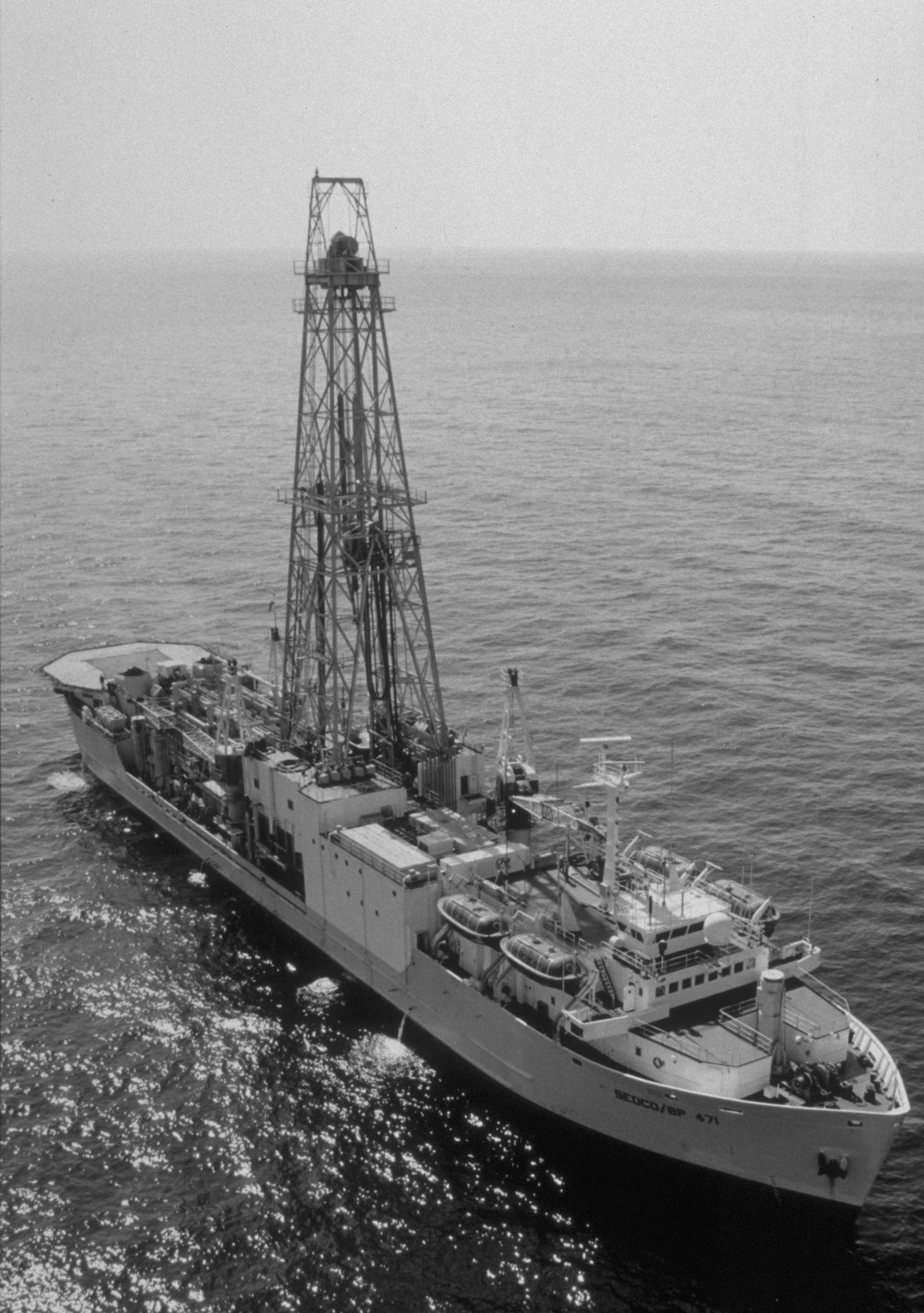
To investigate whether life could persist in the oldest and poorest marine sediments on Earth, an international expedition aboard the research drillship JOIDES Resolution traveled to the center of the South Pacific Gyre. Far removed from continental runoff and nutrient-rich coastal upwellings, this vast oceanic desert exhibits the lowest biological productivity and slowest sedimentation rates anywhere in the world’s oceans. Marine snow accumulates on the abyssal plain so gradually—less than a meter or two every million years—that dissolved oxygen can penetrate all the way down to the underlying volcanic crust.
Researchers led by geomicrobiologist Yuki Morono of the Japan Agency for Marine-Earth Science and Technology and oceanographer Steven D’Hondt of the University of Rhode Island extracted sediment cores from water depths reaching 5,700 meters. Drilling up to seventy-five meters beneath the ocean floor allowed the team to recover red pelagic clay layers deposited between 4.3 million and 101.5 million years ago during the Cretaceous Period.
Inside those ancient clay horizons, organic carbon was almost completely exhausted, leaving trapped microorganisms without enough chemical energy to divide or perform normal cellular maintenance. Yet traces of dissolved oxygen remained present throughout the entire sediment column, creating an oxic time capsule sealed off from younger surface waters.
Awakening Cretaceous Bacteria After 100 Million Years of Starvation
Back inside a sterile laboratory, the team incubated samples of the 101.5-million-year-old clay with isotopically labeled carbon and nitrogen nutrients such as ammonia, acetate, and amino acids. Within weeks, up to 99.1 percent of the dormant microbes absorbed the nutrients, repaired their cellular machinery, and multiplied their populations ten-thousand-fold inside sixty-eight days. Genetic sequencing revealed that the awakened survivors belonged primarily to diverse aerobic bacterial phyla—including Actinobacteria, Bacteroidetes, Firmicutes, and Proteobacteria—rather than specialized spore-forming species.
Confirming that non-spore-forming bacteria can survive for over a hundred million years on virtually zero energy represents a landmark discovery in microbiological science and deep-biosphere research. Stringent chemical tracers verified that the microscopic cells were genuine ancient inhabitants of the impermeable clay rather than modern contaminants introduced during drilling.
Implications for Sub-Seafloor Longevity and Extraterrestrial Life
The revival of Cretaceous marine bacteria demonstrates that microorganisms trapped in oxic deep-sea sediments face no apparent evolutionary lifespan limit as long as trace oxygen persists. If aerobic life can endure for over one hundred million years inside energy-depleted planetary crust on Earth, similar dormant microbes could potentially survive for geological eons beneath the oxidized subsurface soils of Mars or the icy oceans of Europa.
Biochemists are now investigating the precise molecular repair mechanisms that prevented DNA degradation and protein breakdown inside these cells across one hundred million years. Because the fine-grained abyssal clay has pore spaces smaller than a single bacterium, the trapped microbes could not move to seek food or escape their microscopic mineral chambers. Their survival proves that metabolic stasis can preserve living cells across geological epochs previously thought impossible for active biology.