By Sophia Reed
Federal space and energy officials have established an end-to-end development framework to transition nuclear power from laboratory testing to operational lunar and interplanetary missions. Effective November 1, 2026, the interagency agreement accelerates space nuclear fission propulsion for a 2028 orbital demonstration and targets a launch-ready lunar surface reactor by 2030.
Signed on Thursday, October 8, 2026, during the Golden Age science summit in Washington by space agency Administrator Jared Isaacman and U.S. Secretary of Energy Chris Wright, the Memorandum of Understanding establishes a unified structure for space nuclear power and propulsion. With White House Office of Science and Technology Policy Director Michael Kratsios in attendance, the pact linked fuel production, reactor design, ground testing, launch integration, and flight operations.
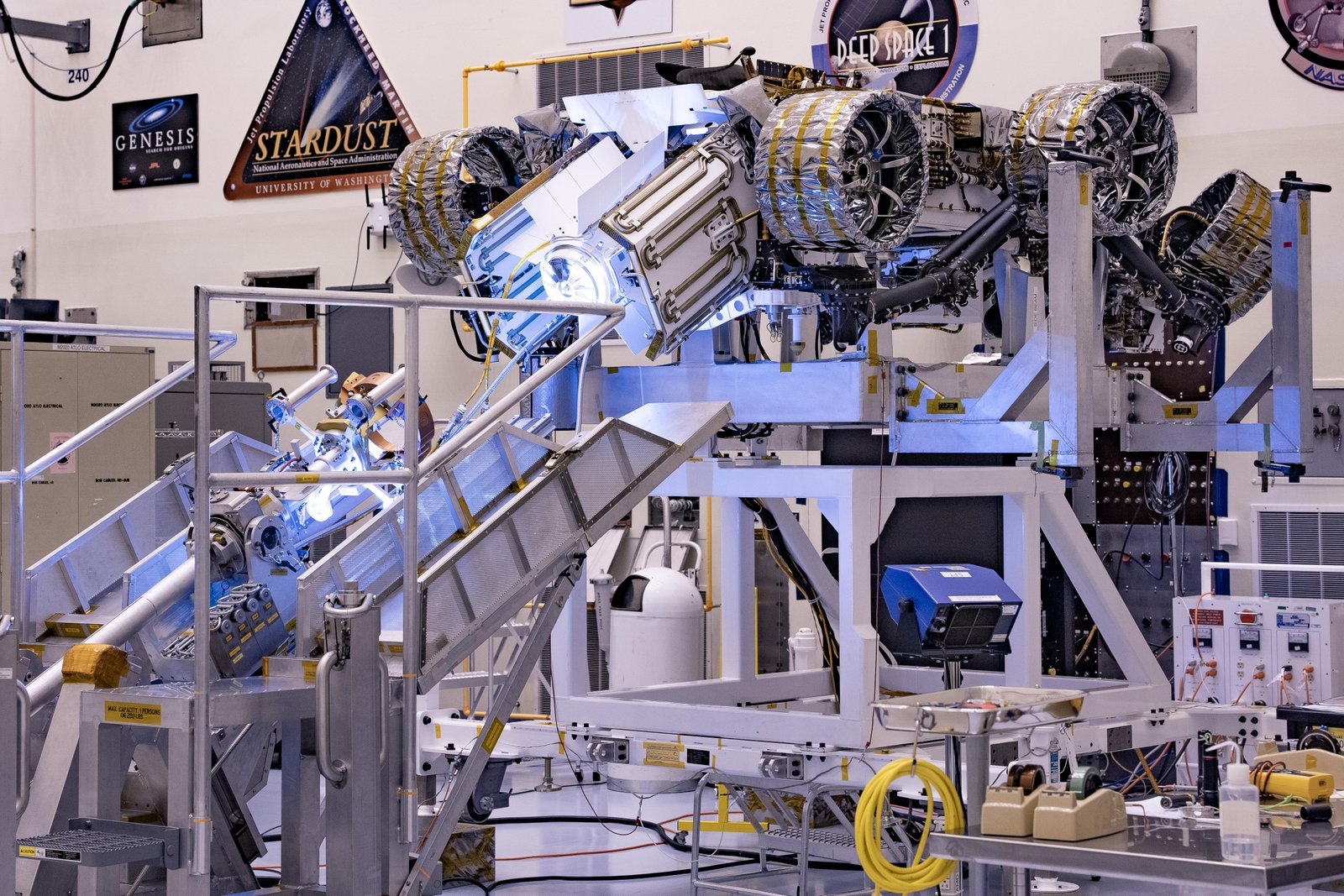
The agreement directly supports a December 2025 executive directive calling for a launch-ready lunar surface reactor by 2030 to sustain a permanent human presence on the Moon. While solar arrays effectively power inner solar system satellites, sunlight vanishes during the freezing 14-Earth-day lunar night and weakens dramatically across the outer planets and dust-swept Martian plains.
Space Reactor-1 Freedom and Lunar Reactor-1 Timelines
The joint engineering roadmap centers on two foundational hardware initiatives designed to build a domestic industrial base for space nuclear fission. First, the Space Reactor-1 Freedom mission is scheduled to launch in 2028, advancing nuclear propulsion from laboratory development to operational deep-space flight.
Flight data and reactor technology from that 2028 mission will feed directly into Lunar Reactor-1, a fission surface power system slated for launch readiness by 2030. Positioned near a future Moon base, the surface reactor will provide continuous electrical power through shadow and lunar night to run crew habitats, communications arrays, scientific instruments, rovers, and in-situ resource utilization plants.
Isaacman noted that fission power will allow spacecraft to travel farther, operate longer, and carry more capable scientific payloads than chemical or solar systems alone. Wright added that partnering across federal laboratories extends domestic nuclear engineering into deep space to meet the demanding energy and transit requirements of future human expeditions to Mars.
Expanding Radioisotope Power for Titan and Mars Rovers
Alongside fission reactors, the two agencies are expanding the deployment of radioisotope power systems that convert the natural decay heat of plutonium-238 into electricity using solid-state thermocouples with no moving parts. For the car-sized Dragonfly rotorcraft scheduled to launch toward Saturn’s moon Titan in 2028, the Department of Energy is supplying a Multi-Mission Radioisotope Thermoelectric Generator and 24 Light Weight Radioisotope Heater Units.
Federal energy and space teams also confirmed plans to provide 24 similar radioisotope heater units for the European Space Agency’s Rosalind Franklin Mars rover. Those compact thermal units will maintain onboard astrobiology instrument temperatures as the rover searches for signs of past or present life in the extreme cold of the Martian environment.
Across every single operational stage of nuclear fuel fabrication, thermal vacuum reactor testing, and launch integration at facilities such as Idaho National Laboratory and Kennedy Space Center, strict nuclear safety remains the program’s central pillar. As deep-space engineering and Science advance together, next-generation fission and radioisotope power systems will unlock sustained, long-duration human and robotic exploration across the solar system.