By Sophia Reed
More than three decades after its deployment into low Earth orbit, one of humanity’s most productive astronomical observatories could receive a new lease on life from private aerospace providers. Space officials have opened a formal inquiry into commercial Hubble servicing concepts designed to extend the telescope’s operational lifetime.
Issued on October 29, 2026, the Request for Information invites domestic aerospace companies to submit technical capabilities and mission concepts by 3 p.m. EST on Monday, November 30. Rather than committing immediately to a single procurement contract, the solicitation surveys how rapidly maturing private spacecraft systems could support the landmark observatory over the coming decade.
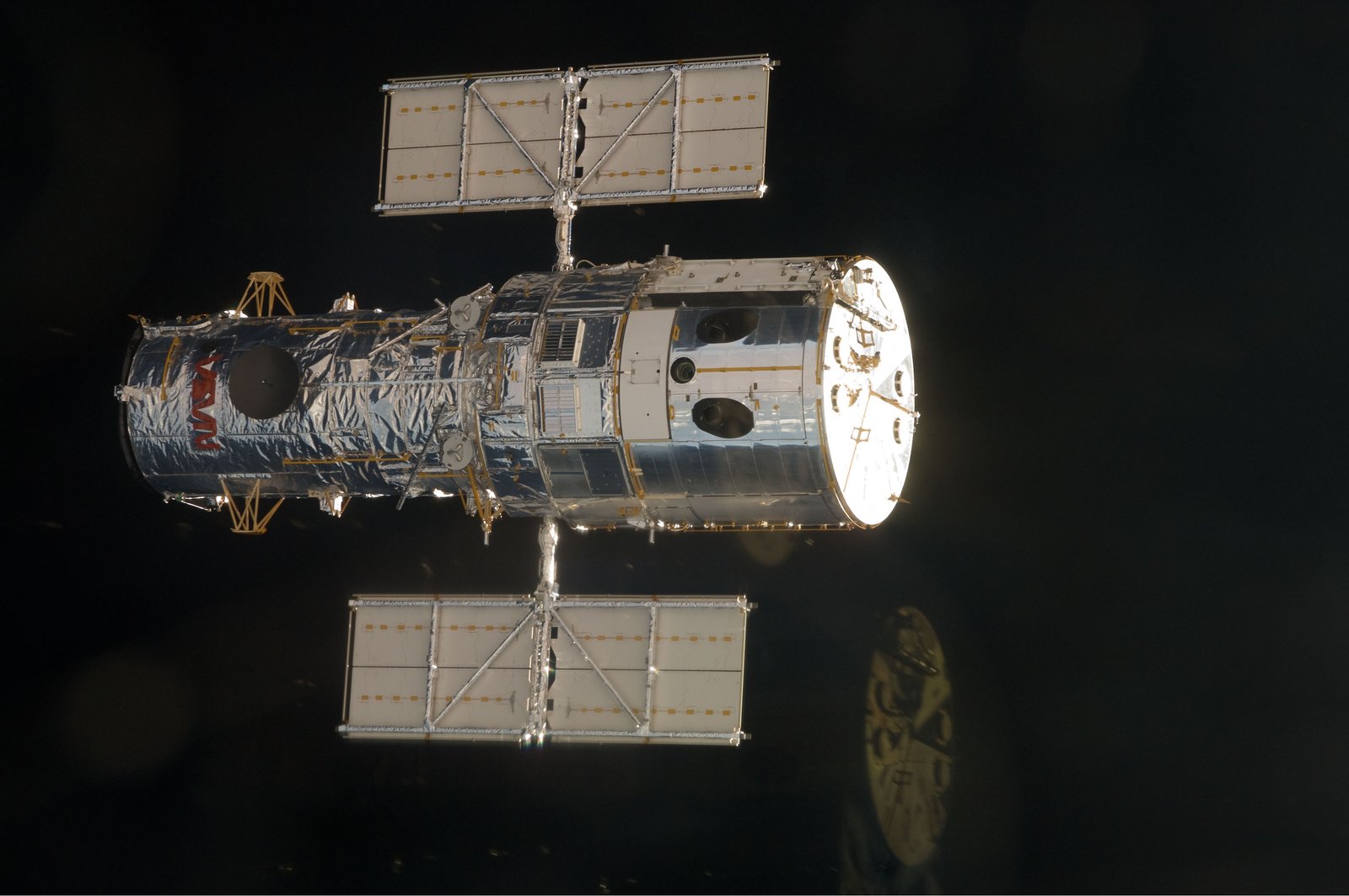
Operating since its April 1990 launch in cooperation with the European Space Agency, the telescope is managed from Goddard Space Flight Center in Greenbelt, Maryland, with operational support from Lockheed Martin Space in Denver and the Space Telescope Science Institute in Baltimore. Administrator Jared Isaacman emphasized that exploring cost-effective ways to extend an existing orbital asset delivers maximum scientific value for taxpayers.
Countering Atmospheric Drag Before the 2032 Window
Like every spacecraft circling in low Earth orbit, the observatory experiences continuous friction from trace gas molecules in the upper atmosphere. Because the railroad-car-sized telescope was constructed without an onboard propulsion system, it cannot fire thrusters to counter orbital decay and maintain its altitude independently.
Current orbital trajectory analyses predict that, without external intervention, atmospheric drag will pull the observatory down to an atmospheric re-entry in the 2033 to 2034 timeframe. Consequently, mission planners anticipate that any practical servicing or orbital reboost flight would need to launch and rendezvous with the spacecraft by 2032.
During the Space Shuttle era, astronaut crews visited the telescope on five servicing missions between December 1993 and May 2009, including the second servicing flight in February 1997. Those spacewalking teams replaced gyroscopes and solar arrays, installed upgraded cameras such as Wide Field Camera 3 and the Cosmic Origins Spectrograph, and boosted the spacecraft into higher orbits.
Three Pathways for Private In-Space Support
The October 2026 solicitation outlines three distinct operational areas where private industry could contribute. First, companies can propose robotic or crewed commercial Hubble servicing missions focused on capturing the observatory and boosting it to a higher, more stable orbital altitude to extend its science lifetime.
Second, the inquiry evaluates whether commercial vehicles could perform on-orbit hardware servicing to enhance the telescope’s pointing and scientific capabilities. Third, officials are gathering industry concepts for attaching a propulsion module to perform a safe, controlled atmospheric re-entry or orbital disposal when the observatory eventually concludes its mission.
Even in its fourth decade of operations, the observatory continues producing major findings, including a November 2026 study of 37 nearby dwarf galaxies that uncovered unexpected patterns of missing oxygen and new observations of gravitational lenses charting a path for the Nancy Grace Roman Space Telescope. Its ultraviolet sensitivity remains unmatched by infrared observatories, making continued operations highly valuable to astronomers worldwide.
Science Mission Directorate Associate Administrator Nicky Fox noted that private industry has evolved rapidly in recent years to offer new satellite capture and servicing technologies. Advances in orbital robotics regularly covered in Science could keep the iconic observatory productive while next-generation flagship telescopes are developed.