By Noah Carter
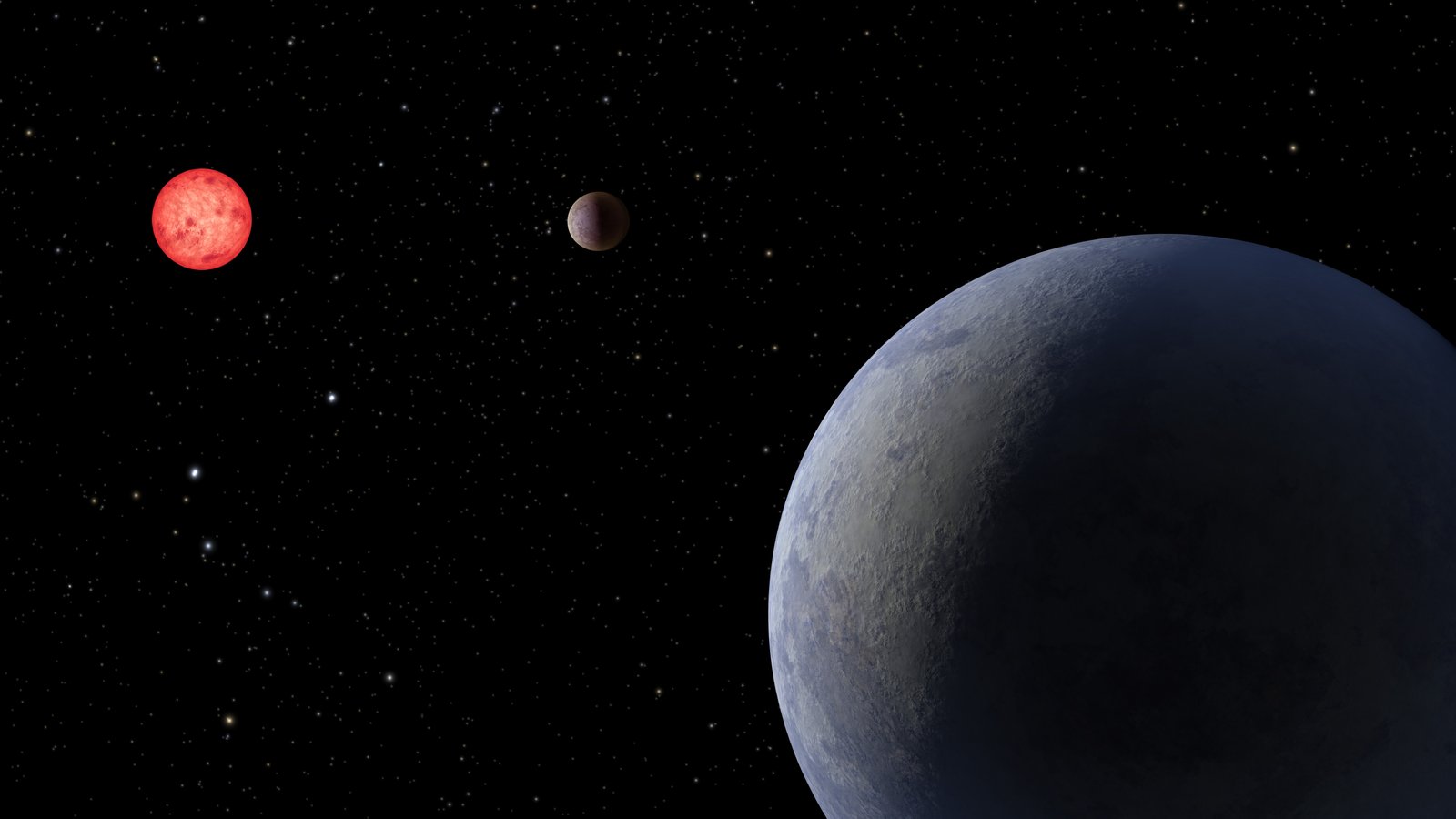
Coordinated observations between space-based survey satellites and ground-based robotic observatories have identified two remarkable super-Earths circling within the temperate zones of nearby red dwarf stars. Situated roughly 100 light-years from Earth, the newly characterized worlds LP 890-9c and TOI-1452b offer prime laboratories for investigating liquid water and planetary atmospheres.
Pairing Space Transit Surveys with Ground Infrared Telescopes
Red dwarf stars, classified by astronomers as M-dwarfs, account for more than seventy percent of all stars in the Milky Way galaxy. Because these cool, low-mass stars shine far more dimly than our sun, any planet orbiting in their habitable zone—where surface temperatures allow liquid water to persist—must circle in a tight, rapid orbit. When such a close-in planet crosses directly in front of its compact host star, it blocks a relatively large fraction of starlight, making transit detection highly effective.
Initial candidate signals frequently emerge from wide-field optical surveys conducted by the Transiting Exoplanet Survey Satellite, which monitors hundreds of thousands of bright, nearby stars across the sky. Because ultra-cool red dwarfs emit most of their light in near-infrared wavelengths, ground-based networks like the SPECULOOS robotic observatories and infrared spectrographs such as SPIRou follow up to confirm planetary radii and gravitational masses. This combined space-and-ground strategy recently validated two standout temperate worlds in our immediate cosmic neighborhood.
LP 890-9c at the Inner Edge of the Habitable Zone
Located 104 light-years away in the constellation Eridanus, the ultra-cool dwarf star LP 890-9—also cataloged as SPECULOOS-2—is the second-coolest star known to host a planetary system after TRAPPIST-1. After space photometry flagged an inner planet, LP 890-9b, orbiting the star every 2.7 days, high-precision ground telescopes detected a second, slightly larger world farther out. Designated LP 890-9c or SPECULOOS-2c, this outer super-Earth has a radius roughly forty percent larger than Earth’s and a rocky terrestrial profile.
Although LP 890-9c completes a full orbit in just 8.5 Earth days, its tiny host star is only about fifteen percent the size of the sun and has a surface temperature below 2,900 Kelvin. Consequently, the planet receives about ninety-one percent of the incident stellar energy that Earth receives from the sun, placing it squarely near the inner boundary of the conservative habitable zone. Its proximity and favorable transit depth make it one of the highest-priority terrestrial targets for atmospheric transmission spectroscopy.
TOI-1452b and the Possibility of Deep Extrasolar Oceans
A second discovery, TOI-1452b, orbits one of two small red dwarf stars in a binary system located about 100 light-years away in the northern constellation Draco. Completing an orbit every 11.1 days, TOI-1452b is roughly seventy percent larger than Earth in diameter and nearly five times as massive. At its temperate orbital distance, the planet receives mild irradiation comparable to what Venus receives in our solar system, allowing liquid water to exist on its surface if supported by a suitable atmosphere.
Radial velocity measurements revealed that despite its rocky size class, TOI-1452b has a bulk density of 5.6 grams per cubic centimeter, surprisingly close to Earth’s uncompressed density despite higher gravitational compression. Interior structure modeling indicates that if the planet possesses a normal iron-to-silicate core ratio, volatile materials such as water could account for up to twenty-two to thirty percent of its total mass, similar to icy moons like Ganymede or Enceladus. Ongoing breakthroughs in exoplanet astronomy and planetary science will soon test whether worlds like TOI-1452b are true deep-ocean planets or rocky super-Earths cloaked in thin hydrogen envelopes.