By Sophia Reed
Quantum computing architects have shifted focus from chasing raw qubit counts on single fragile chips to engineering low-noise, modular superconducting networks. Led by hardware milestones such as the IBM Quantum System Two powered by Heron processors and the error-correcting Google Willow chip, the industry is laying the physical groundwork for fault-tolerant million-qubit supercomputers.
Overcoming Quantum Decoherence Through Error Suppression
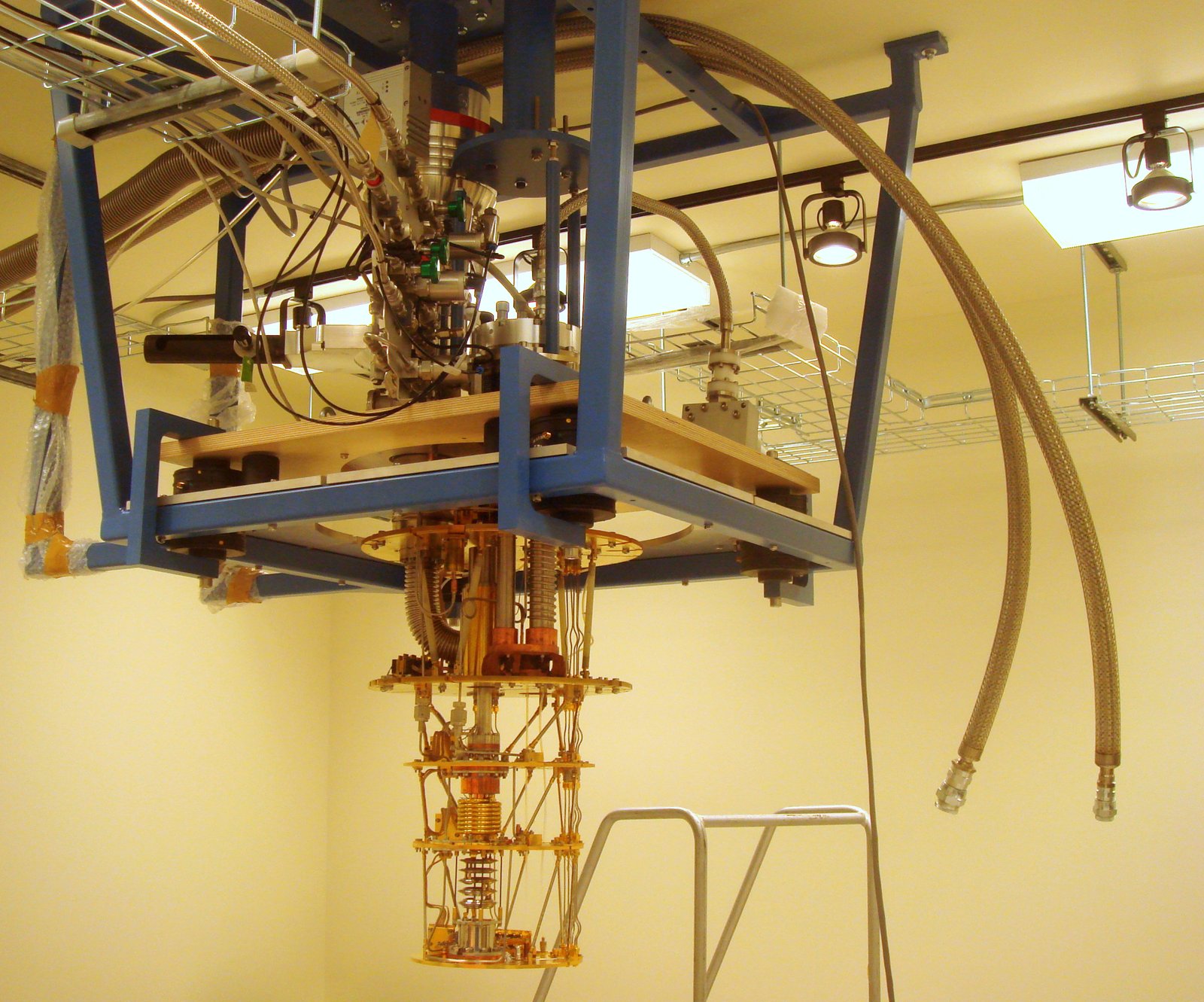
Superconducting transmon qubits store and manipulate information using Josephson junctions cooled to thousandths of a degree above absolute zero. Even inside shielded dilution refrigerators, stray electromagnetic radiation and microscopic material defects cause qubits to lose their quantum state within microseconds.
For years, adding more physical qubits to a chip inadvertently increased crosstalk and gate error rates, undermining complex calculations. On its 105-qubit Willow processor, Google researchers demonstrated below-threshold quantum error correction, proving that grouping more physical qubits into a logical grid exponentially reduces net errors.
In parallel, IBM engineered its 133-qubit Heron processor with tunable coupler architectures that virtually eliminate parasitic crosstalk between neighboring qubits. Delivering a fivefold reduction in error rates over prior generations, these refined superconducting processors execute far deeper quantum circuits reliably.
Coherence times on modern superconducting chips now exceed 100 microseconds, giving real-time syndrome decoders enough time to detect and correct phase flips on the fly. High-speed qubit reset protocols also clear residual excitations between calculation runs in a fraction of a millisecond.
Cryogenic Modularity Inside Quantum System Two
Because a single cryogenic wafer cannot practically house the hundreds of thousands of physical qubits required for full fault tolerance, hardware roadmaps now rely on modular interconnects. Measuring 22 feet wide by 12 feet high, IBM Quantum System Two serves as the first utility-scale modular quantum mainframe.
Its expandable cryogenic infrastructure houses three Heron processors simultaneously within a shared near-vacuum environment cooled to millikelvin temperatures. Classical control electronics, cryogenic microwave cabling, and real-time error-decoding hardware operate in tight synchronization alongside the quantum chips.
Upcoming processor generations integrate short-range chip-to-chip couplers with longer cryogenic coaxial links that pass entangled quantum states between separate modules. This shift in quantum computing technology allows enterprise data centers to link multiple quantum processing units into a unified virtual fabric.
High-density flex cabling replaces bulky copper coax lines inside the cryostat, reducing thermal heat loads while supporting thousands of microwave control channels. Modular vacuum chambers can also be linked side by side to expand system capacity without rebuilding the surrounding cryogenic facility.
Bridging Quantum Processors With Classical Supercomputers
Scaling toward million-qubit clusters requires seamlessly blending modular quantum processors with high-performance classical GPU supercomputers. Quantum-centric supercomputing offloads molecular simulation and optimization sub-routines to superconducting qubits while classical clusters handle pre-processing and error decoding.
Low-density parity-check error-correction codes also promise to slash the physical qubit overhead needed to protect each logical qubit by up to ninety percent. Reducing that hardware overhead brings utility-scale chemistry, battery materials discovery, and cryptography modeling years closer to commercial deployment.
By combining below-threshold error suppression on chips like Willow with the modular cryogenic backplane of System Two, superconducting hardware has crossed a decisive engineering inflection point. Modular quantum mainframes are now poised to scale from noisy laboratory prototypes into fault-tolerant industrial machines.