By Noah Carter
Mobile robots face a fundamental design trade-off: carrying bigger lithium-ion batteries extends operating range but adds dead weight that drains motor power. To break that cycle, mechanical engineers led by James Pikul at the University of Pennsylvania developed a metal-air scavenger system that allows robots to extract electricity directly by oxidizing metal surfaces beneath them.
Reinventing The Metal-Air Battery As An Open Scavenger
Animals achieve remarkable endurance because they consume energy-dense food and oxygen from their surroundings rather than carrying a lifetime supply of fuel internally. Inspired by biological metabolism, researchers sought a way for machines to harvest chemical energy directly from structural metals in their operating environment.
Conventional metal-air batteries generate electricity by oxidizing an internal metal plate—such as aluminum, zinc, or iron—with atmospheric oxygen across a liquid electrolyte. While metal-air cells pack up to ten times the energy density of lithium-ion packs, their internal metal anodes eventually dissolve and must be replaced.
The metal-air scavenger flips this geometry inside out by leaving the metal anode out of the vehicle altogether. Instead, the robot drags a flexible platinum-catalyzed cathode and a moist polymer hydrogel pad across exposed aluminum, steel, or zinc surfaces.
How Hydrogel Pads Convert Surface Oxidation Into Power
Acting as a compliant sponge, the semi-solid hydrogel membrane maintains ionic contact between the robot’s oxygen-reduction cathode and the underlying metal floor. Water and dissolved electrolyte salts inside the gel enable hydroxide ions to migrate directly to the metal surface.
As the hydrogel slides across bare aluminum, an electrochemical reaction breaks chemical bonds in the microscopically thin top layer of metal and releases electrons. Those electrons flow through a conductive wire into the robot’s drive motors before returning to the cathode to reduce ambient oxygen.
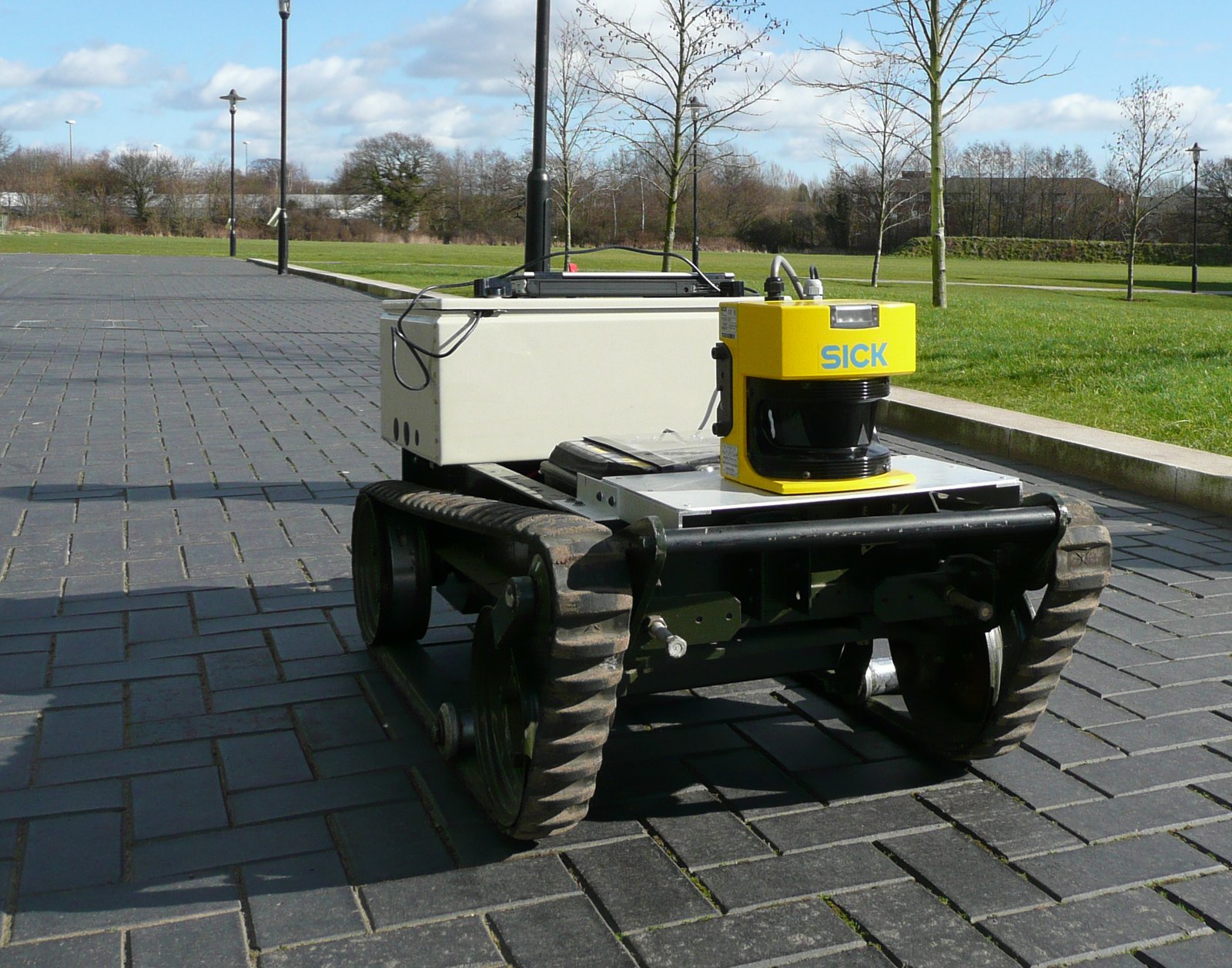
Laboratory demonstrations proved that this metal-air scavenger delivers roughly 13 times higher energy density than lithium-ion batteries by eliminating heavy onboard anode mass. Integrating this autonomous robotics technology into a miniature wheeled vehicle enabled continuous propulsion powered solely by the aluminum track beneath its chassis.
Tests across zinc, stainless steel, and aluminum alloys showed that the hydrogel pad adapts its power output automatically to the oxidation potential of each metal. Micro-channels molded into the gel base also wipe away microscopic oxide byproducts as the vehicle moves forward.
Applications In Disaster Rescue And Structural Inspection
Because the oxidation reaction only etches away microns of surface metal, a grazing robot causes negligible structural damage to thick steel beams or aluminum plates. Operators only need to replenish water in the hydrogel pad periodically to keep the electrochemical circuit running.
Recent advances by Pikul’s research group have further optimized aluminum-air robotic architectures, cutting total onboard energy-storage mass by more than 40 percent. Lighter power systems allow small crawling and legged robots to carry heavier thermal cameras, chemical detectors, and communication relays.
Onboard navigation sensors can also guide a low-battery robot toward nearby metal panels whenever its internal buffer capacitor drops below a set voltage threshold. Once parked on a conductive plate, the hydrogel pad lowers automatically to replenish reserves before resuming exploration.
In collapsed buildings, decommissioned industrial plants, or damaged ship hulls, rescue and inspection micro-robots could recharge autonomously by resting against exposed metal girders. By turning everyday structural metals into an abundant energy source, metal-air scavenging liberates field robotics from wall outlets and heavy battery packs.