By Grace Turner
Materials scientists at the University of Bristol and UK atomic energy partners have created a solid-state betavoltaic battery that transforms nuclear reactor waste into a multi-millennia micropower source. By encapsulating radioactive carbon-14 extracted from decommissioned graphite moderator blocks inside synthetic diamond, the cell delivers continuous trickle electricity for medical implants and deep-space probes.
Upcycling Irradiated Graphite From Legacy Reactors
Decades of nuclear power generation have left behind hundreds of thousands of tons of irradiated graphite blocks once used to moderate neutron speeds inside reactor cores. High-temperature neutron bombardment converts natural carbon near the surface of those blocks into the radioactive isotope carbon-14.
Researchers led by materials physicist Tom Scott discovered that heating the decommissioning waste vaporizes the concentrated carbon-14 gas right out of the graphite matrix. Removing the radioactive isotope significantly reduces the radioactivity and long-term storage cost of the remaining bulk nuclear waste.
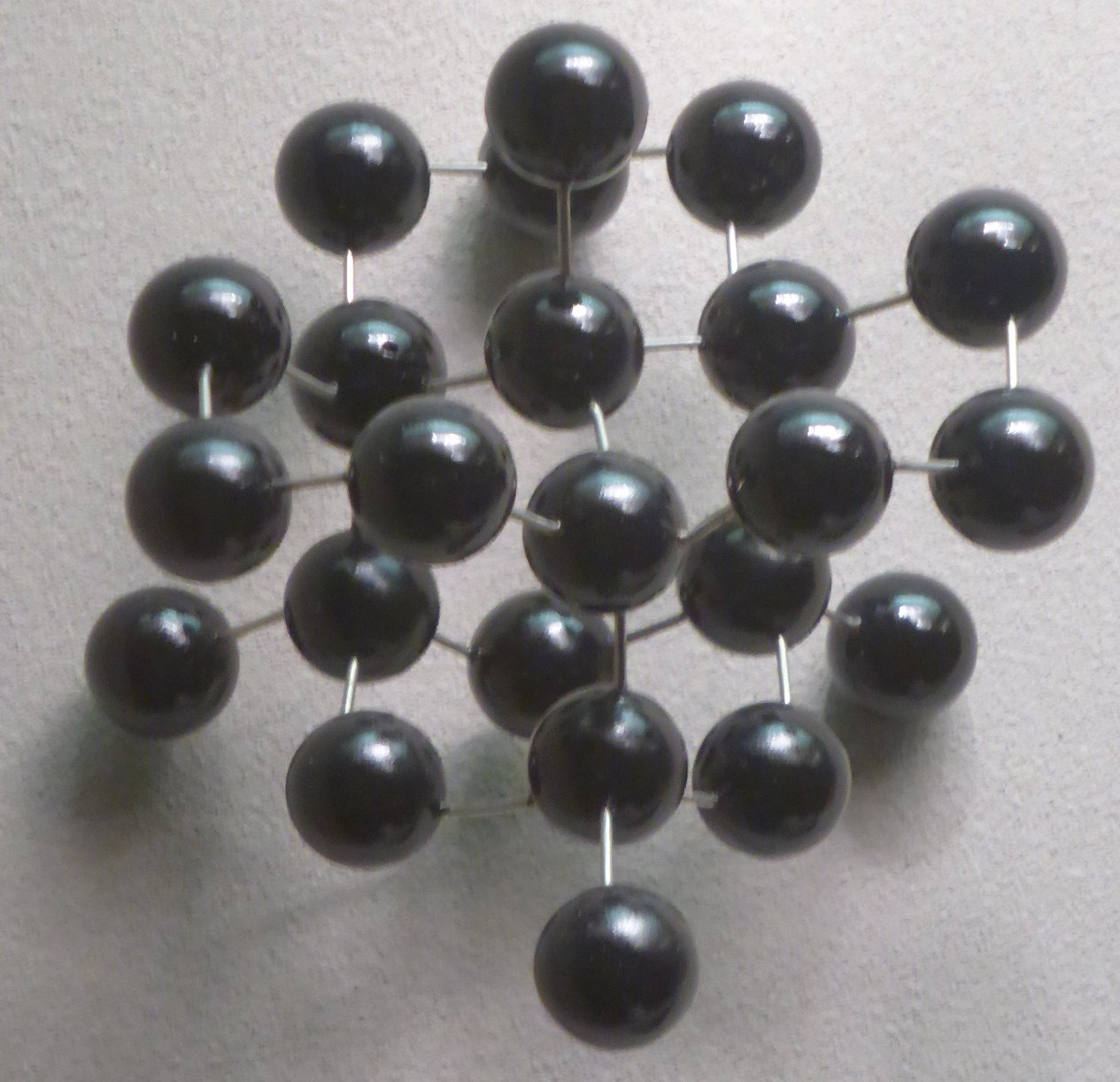
The captured carbon-14 gas is then purified and fed into a low-pressure chemical vapor deposition chamber. Inside the reactor, plasma growth incorporates the radioactive atoms directly into the crystalline lattice of a man-made semiconductor diamond.
How Betavoltaic Diamond Semiconductors Generate Current
Unlike conventional chemical batteries that degrade as ions shuttle between electrodes, a betavoltaic cell harvests energy from natural radioactive beta decay. As carbon-14 slowly decays back into stable nitrogen, it emits fast-moving, short-range electrons known as beta particles.
When those high-energy electrons collide with the surrounding diamond crystal lattice, each beta particle liberates thousands of low-energy conduction electrons. Similar to how sunlight excites electrons inside a solar panel, the semiconductor junction collects that cascading charge into a steady microwatt current.
To ensure absolute biological safety, engineers grow a protective outer shell of non-radioactive carbon-12 diamond around the active core. Because short-range beta radiation cannot penetrate solid diamond, this breakthrough in solid-state battery technology emits less external radiation than a common household banana.
Diamond’s extreme hardness and wide semiconductor bandgap prevent radiation damage from degrading the internal crystal structure over centuries of continuous beta bombardment. Gold or titanium ohmic contacts deposited onto the diamond faces route the harvested current directly to miniature voltage regulators.
Powering Pacemakers And Deep-Space Sensors For Centuries
Carbon-14 possesses a physical half-life of 5,730 years, meaning a diamond betavoltaic battery retains half of its initial power output after nearly six millennia. Because the solid-state crystal contains no moving parts or liquid electrolytes, it operates reliably across extreme temperatures and pressures.
Biocompatible diamond micropower cells are ideally suited for ocular implants, hearing aids, and cardiac pacemakers that currently require invasive surgeries for battery replacement. Paired with a miniature supercapacitor to buffer peak pulses, a single gram of carbon-14 diamond can sustain low-power electronics indefinitely.
Automated robotic extraction lines installed at fusion and fission decommissioning facilities are now scaling isotope harvesting from legacy graphite stockpiles. Even a tiny fraction of global graphite waste contains enough radioactive carbon to manufacture millions of solid-state micropower wafers for industrial customers.
Aerospace engineers and commercial startups are also adapting nuclear diamond cells for active radio-frequency identification tags, seafloor seismic beacons, and outer-planet spacecraft. Turning hazardous reactor graphite into self-shielded diamond power cells solves a nuclear waste challenge while powering devices built to outlast human lifetimes.