By Grace Turner
A radical marine architecture concept known as the Tetrahedron reimagines luxury ocean travel by replacing the traditional boat hull with a four-sided geometric pyramid. Designed by British architect Jonathan Schwinge, the carbon-fiber vessel rides atop a single vertical strut connected to a submerged torpedo hull and hydrofoils, lifting passengers completely above turbulent surface waves.
Geometric Rigidity of a Carbon-Fiber Tetrahedron Hull
For centuries, naval architects have shaped vessel hulls as elongated troughs that plow through the water surface, subjecting passengers to relentless pitching, rolling, and slamming in heavy swells. Seeking to strip away conventional nautical styling, designer Jonathan Schwinge turned to one of geometry’s strongest and simplest three-dimensional forms: the tetrahedron, a pyramid composed of four triangular faces meeting at six straight edges and four sharp vertices. Measuring roughly 21.6 meters—or 70 feet—along its base and reaching 25 meters in overall length, the proposed superstructure encloses multi-level living quarters for six guests and four crew members within sleek, faceted surfaces.
To keep the elevated pyramid lightweight yet impervious to torsional flexing, the design specifies a cellular composite frame constructed from carbon fiber and corrosion-resistant duplex stainless steel. At low harbor speeds or while anchored, the pyramid rests stably on the water using three contoured underbelly hulls integrated into its lower triangular base. When docked in calm marinas, the three lower faces fold outward on hydraulic hinges to form expansive waterside sun decks, outdoor dining terraces, and a rear swimming and boarding platform.
Submerged Torpedo Hydrofoils and HYSWAS Marine Physics
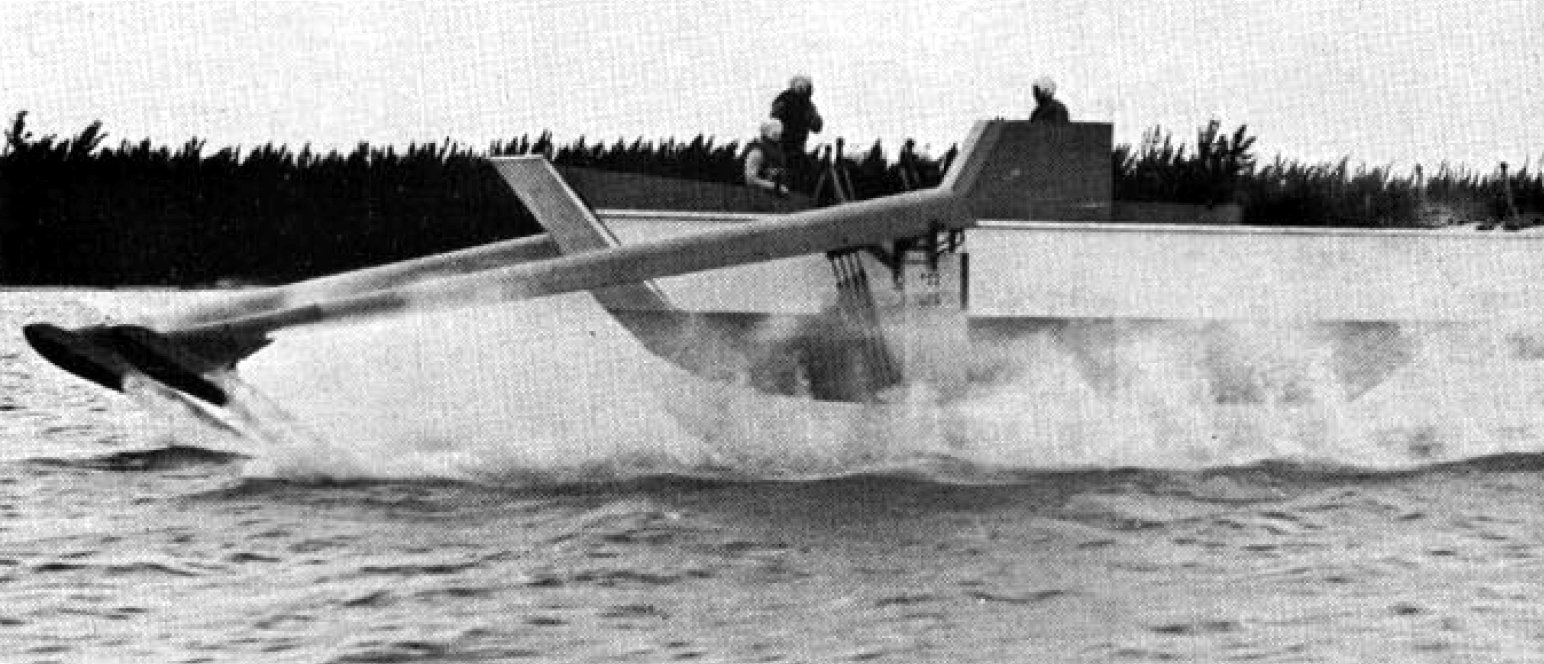
Rather than inventing an unproven propulsion scheme from scratch, the Tetrahedron adapts a naval engineering platform known as a Hydrofoil Small Waterplane Area Ship, or HYSWAS, originally researched by maritime defense engineers in the 1990s. Beneath the center of the pyramid, a single streamlined vertical strut extends deep below the waterline to connect with a cigar-shaped submerged torpedo hull. That underwater torpedo houses the main propulsion machinery and carries twin horizontal hydrofoil wings that generate hydrodynamic lift as forward speed increases.
During takeoff at around 15 knots, upward lift from the submerged hydrofoils raises the entire pyramidal superstructure several meters clear of the ocean surface. Once airborne on its central strut, the yacht reaches a projected cruising speed of 38 knots—roughly 70 kilometers per hour—across an estimated operational range of 3,000 nautical miles. Because only the thin, knife-like vertical strut slices through the air-sea boundary, the vessel bypasses almost all surface wave-making resistance and skin-friction drag.
Fly-by-Wire Stabilization Through Rough Offshore Swells
Eliminating hull contact with surface chops removes the violent slamming forces that normally force conventional motor yachts to throttle back during offshore storms. Instead of bobbing over every crest and trough, the submerged torpedo glides through calm, undisturbed water several meters beneath the waves while the pyramid cabin appears to levitate above the sea. Passengers aboard experience a smooth, level ride free from the seasickness-inducing roll common to displacement hulls.
Maintaining balance atop a single central strut requires continuous automated control borrowed directly from modern aerospace engineering. A maritime “fly-by-wire” flight control computer monitors gyroscopic pitch, roll, and wave-height sensors millisecond by millisecond, automatically adjusting trailing-edge flaps on the underwater hydrofoils to keep the pyramid level and gently banked through high-speed turns. While no shipyard has yet commissioned a full-scale build of the Tetrahedron, rapid advances in electric hydrofoiling and marine transport continue to bring foil-borne vessels closer to mainstream commercial reality.