By Noah Carter
Four civilian research volunteers stepped out of a sealed 3D-printed facility in Houston on Saturday, October 31, 2026, after spending more than a full year cut off from the outside world. Their 378-day stay inside the CHAPEA Mission 2 habitat generated vital human health and operational data for future lunar and Martian expeditions.
Short for Crew Health and Performance Exploration Analog, the ground-based research campaign operates inside a dedicated building at Johnson Space Center in Houston. Volunteer crew members Ross Elder, Ellen Ellis, James Spicer, and Matthew Montgomery stepped inside the 1,700-square-foot enclosure, known as Mars Dune Alpha, on October 19, 2025, after months of specialized operational training.
Johnson Space Center Director Vanessa Wyche and astronaut Jack Hathaway joined the four returning crew members for a live exit ceremony beginning at 3 p.m. EDT on October 31 as the volunteers emerged from isolation for the first time in 54 weeks. The expedition represents the second of three planned yearlong ground simulations evaluating human readiness for deep-space surface stays.
Simulating Red Planet Operations Inside a 3D-Printed Base
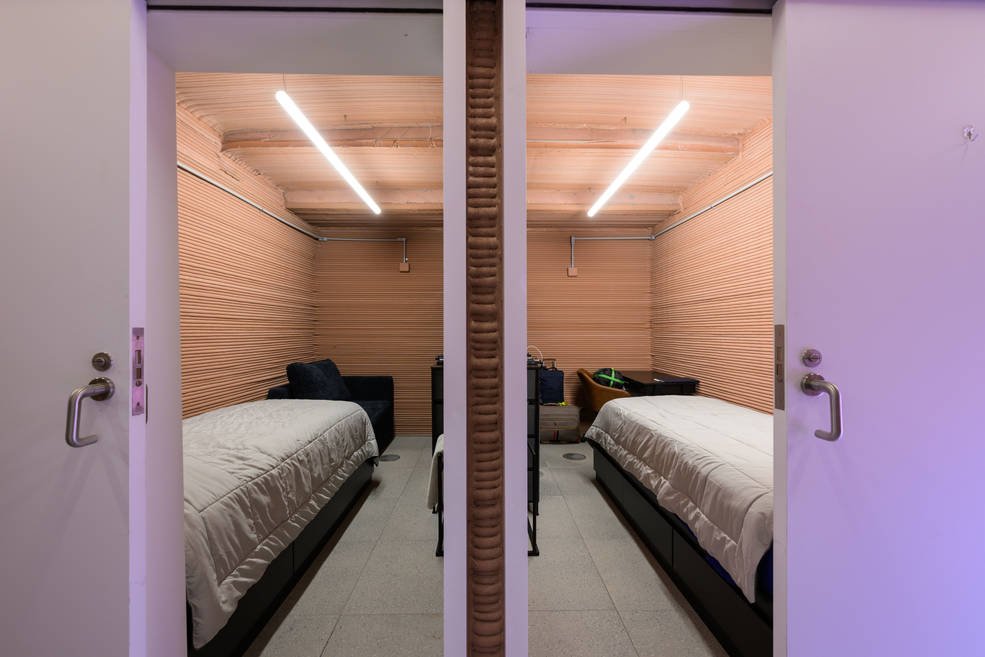
Throughout the 378-day deployment, the four volunteers lived and worked inside an additive-manufactured architectural layout featuring four private crew quarters, a medical workstation, common dining and recreation areas, exercise equipment, and vertical plant-growth racks. An adjacent enclosed exterior chamber filled with red Martian regolith simulant allowed the crew to conduct suited simulated spacewalks.
During CHAPEA Mission 2, the crew marked their 200-day milestone in May 2026 and their one-year mark on October 19 while carrying out geological surveys, robotic operations, habitat maintenance, and indoor crop cultivation. To mirror authentic interplanetary conditions, mission controllers subjected the team to realistic stressors, including strict resource limitations, equipment failures, and prolonged isolation.
Every message exchanged between the habitat and mission control also traveled through a simulated deep-space communication delay of up to 22 minutes each way. That forty-four-minute round-trip latency required the four volunteers to troubleshoot maintenance issues and manage daily schedules autonomously without immediate voice assistance from ground engineers.
Optimizing Food Systems and Behavioral Health for Deep Space
Physiological, cognitive, and psychological measurements collected across the 378 days will directly inform preparation for sustained lunar base operations and future human missions to Mars. Nutritionists tracked how shelf-stable spaceflight food systems supplemented by fresh habitat-grown produce affected crew metabolism, body mass, and team morale over more than a year.
Systems engineers also logged how the crew allocated daily work hours and how much data bandwidth their scientific, medical, and personal communications consumed. Those empirical metrics help mission planners optimize bandwidth allocation across the Deep Space Network when multiple crewed and robotic missions operate simultaneously.
Findings from the second crew will be compared directly against baseline data from the inaugural yearlong analog mission, which concluded in July 2024. Evaluating multiple four-person cohorts under identical habitat constraints allows human research specialists to separate individual crew habits from broader systemic patterns in sleep quality, stress resilience, and workload balance.
Flight doctors and behavioral psychologists will continue working with the four volunteers during post-mission evaluations to strengthen spaceflight medical care and behavioral support practices. Ongoing human factors Science ensures that future deep-space crews will have validated health countermeasures before venturing millions of miles from Earth.