By Grace Turner
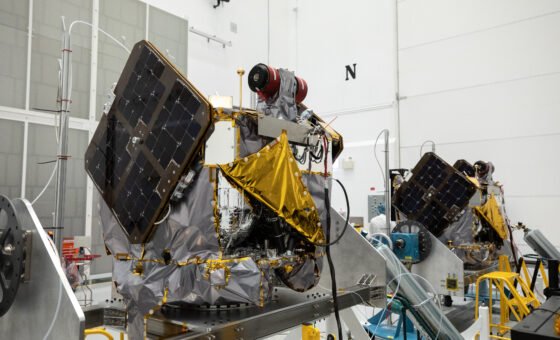
Engineers in Maryland are assembling a car-sized, multi-rotor lander designed to become the first scientific aircraft to fly repeatedly across the surface of another outer-planet moon. Scheduled to launch in 2028, the Dragonfly rotorcraft mission will journey to Saturn’s largest moon, Titan, while carrying a microchip etched with public names.
Announced on October 29, 2026, the Journey to Titan public engagement campaign invites people worldwide to register their names for inclusion on a silicon microchip mounted aboard the lander. Submissions remain open through 11:59 p.m. EST on January 15, 2027, providing each participant with a personalized digital boarding pass commemorating the interplanetary flight.
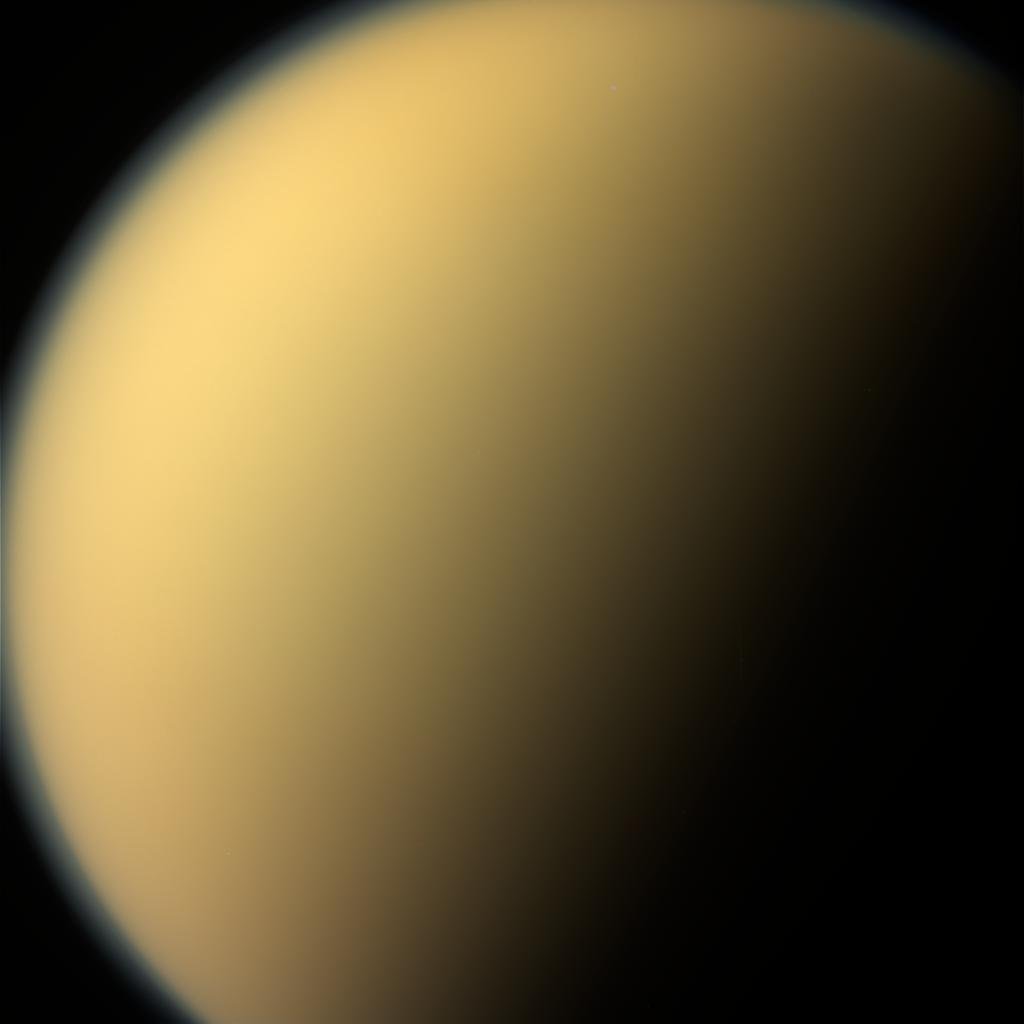
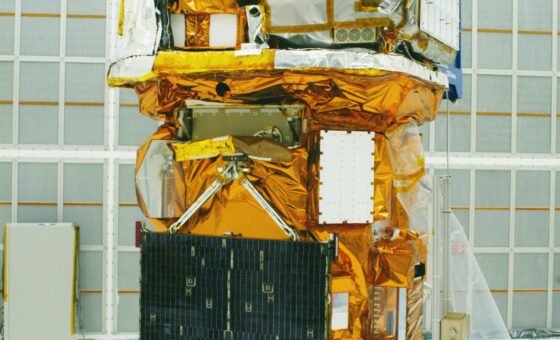
Clean-room specialists at the Johns Hopkins Applied Physics Laboratory in Laurel, Maryland, are currently assembling and testing the spacecraft under the direction of principal investigator Elizabeth Turtle. Selected as the fourth mission in the New Frontiers Program and managed by Marshall Space Flight Center in Huntsville, Alabama, the rotorcraft is scheduled to launch in 2028 and arrive at Titan in 2034.
Flying Through a Dense Nitrogen Atmosphere
Unlike Mars, where an ultra-thin carbon dioxide atmosphere required the Ingenuity helicopter to spin its blades at extreme speeds, Titan possesses a nitrogen-rich atmosphere four times denser than Earth’s at sea level. Combined with surface gravity only one-seventh as strong as Earth’s, those physical conditions make aerodynamic rotorcraft flight an ideal method for long-range planetary exploration.
To operate beneath thick clouds nearly a billion miles from the Sun, the Dragonfly rotorcraft mission will rely on a Multi-Mission Radioisotope Thermoelectric Generator paired with 24 Light Weight Radioisotope Heater Units. Supplied in partnership with the Department of Energy, that nuclear system will recharge the flight batteries between hops and warm onboard electronics in minus 290-degree Fahrenheit cold.
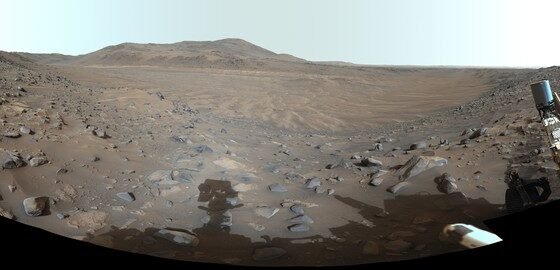
Rather than remaining confined to a single landing zone or crawling slowly over obstacles like a wheeled rover, the eight-rotor craft will fly several miles during each Titan day, which lasts 16 Earth days. Over its multi-year exploration campaign, the vehicle will survey dozens of diverse sites, from sweeping organic sand dunes to ancient impact crater floors.
Searching for Prebiotic Chemistry on an Ocean World
Planetary scientists regard Titan as one of the solar system’s closest analogs to early Earth before life emerged. Science Mission Directorate Associate Administrator Nicky Fox noted that the moon features rivers and lakes of liquid methane and ethane, organic dunes, and a subsurface water ocean that make it a natural laboratory for habitability studies.
At each landing site, drills mounted on the rotorcraft’s landing skids will extract surface samples for analysis inside onboard mass and gamma-ray spectrometers. By investigating regions where complex carbon-rich organic material may have mixed with transient liquid water in the past, researchers aim to trace how prebiotic chemistry advances toward biological building blocks.
Before flight hardware assembly began in Laurel, aerodynamicists tested scale rotor models in specialized subsonic wind tunnels and planetary environmental chambers simulating Titan’s cold, dense air. Onboard optical navigation cameras and lidar sensors were also validated over desert sand dunes to ensure the lander can autonomously identify safe, level touchdown zones.
As astrobiology and planetary Science push deeper into the outer solar system, this aerial explorer will test both habitability conditions and autonomous flight navigation across an alien world.