By Maya Collins
A deadly Mount Everest helicopter crash claimed the life of an international tourist and injured two other people in Nepal after a landing passenger chopper and a cargo helicopter clipped rotor blades at a high-altitude helipad situated more than 14,000 feet above sea level.
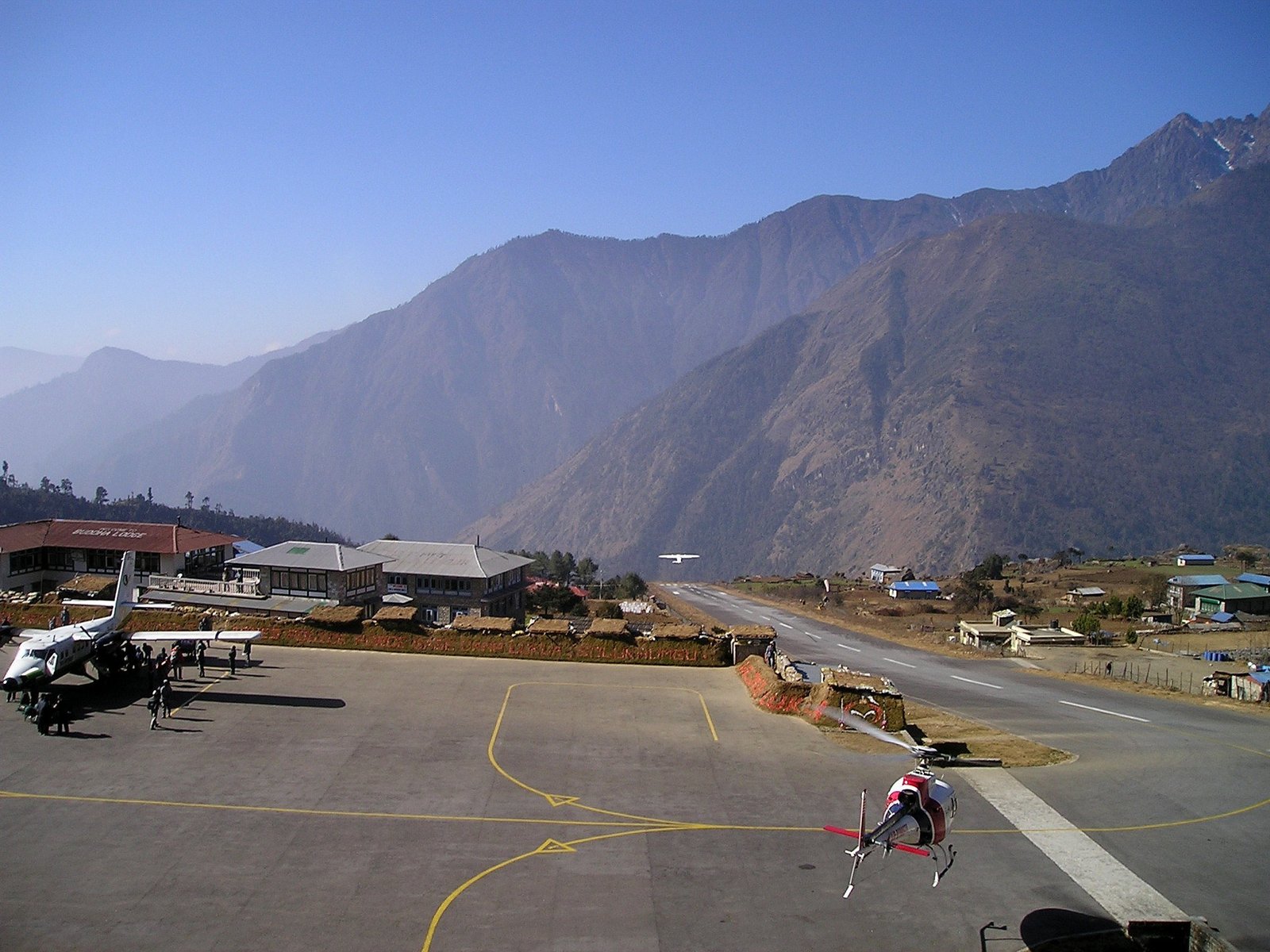
Rotor Blades Collide at 14,000-Foot Himalayan Helipad
The collision unfolded just after 8:00 a.m. local time as trekkers, expedition porters, and ground personnel waited near the snow-covered landing zone near a Mount Everest base camp transit point. Eyewitness video recorded from the edge of the pad captured a red passenger helicopter descending for a landing at the exact moment a blue-and-gray cargo helicopter entered the same approach corridor.
As the two rotorcraft converged just feet above the ground, their spinning main rotor blades touched in midair, triggering an explosive shower of twisted metal and composite debris before both helicopters slammed violently onto the snowpack. Terrified tourists who had sprinted for cover moments earlier immediately turned back toward the smoking wreckage to help pull occupants from the mangled fuselages.
Video from the aftermath showed groups of climbers and mountain workers attempting to lift sections of the overturned passenger aircraft by hand as dark smoke billowed across the snowfield. Nepalese police and aviation officials confirmed that a tourist from India traveling aboard the red passenger helicopter was pronounced dead following the impact.
Condition of Survivors and High-Altitude Rescue Response
A second passenger traveling aboard the red helicopter, identified by local authorities as a citizen of New Zealand, suffered injuries along with the passenger aircraft’s pilot. Emergency rescue teams evacuated both injured survivors from the remote mountain pad to hospital facilities, where officials later reported that both individuals are in stable condition and out of life-threatening danger.
Incredibly, the pilot operating the blue-and-gray cargo helicopter walked away from the collision without physical injury despite extensive structural destruction to both aircraft. Nepalese emergency personnel secured the crash site against fuel hazards while aviation inspectors began documenting the debris distribution across the snow-covered landing pad.
Witnesses at the scene noted that clear morning weather had encouraged a busy wave of sightseeing, trekking shuttle, and supply flights across the valley prior to the accident. Ground crews equipped with fire extinguishers worked quickly in subfreezing temperatures to prevent leaking aviation fuel from igniting surrounding expedition gear and oxygen canisters stacked near the landing zone.
Safety Scrutiny on Vital Everest Transit Corridor
Positioned at an elevation exceeding 14,000 feet above sea level, the mountain helipad serves as an essential transit, supply, and medical evacuation hub for thousands of international climbers, trekkers, and Sherpa guides traveling to scale Mount Everest each season. Because thin high-altitude air reduces rotor lift and engine performance, pilots face narrow operating margins during every landing and takeoff.
Aviation regulators in Nepal have opened a formal inquiry into visual separation protocols, ground marshaling procedures, and radio communication frequencies at un-towered mountain landing zones. Readers following international aviation developments on our Breaking News page can track the investigation as authorities weigh stricter slot controls and mandatory ground-control dispatchers for Himalayan helicopter operators during peak autumn and spring climbing windows.