By Olivia Parker
Astrophysicists analyzing 37 nearby low-mass stellar systems have uncovered the mechanism behind dwarf galaxies missing oxygen across our local cosmic neighborhood. Published on November 2, 2026, in The Astrophysical Journal, the study demonstrates that energetic winds driven by exploding supernovae strip low-mass galaxies of nearly all the heavy elements forged by their stars.
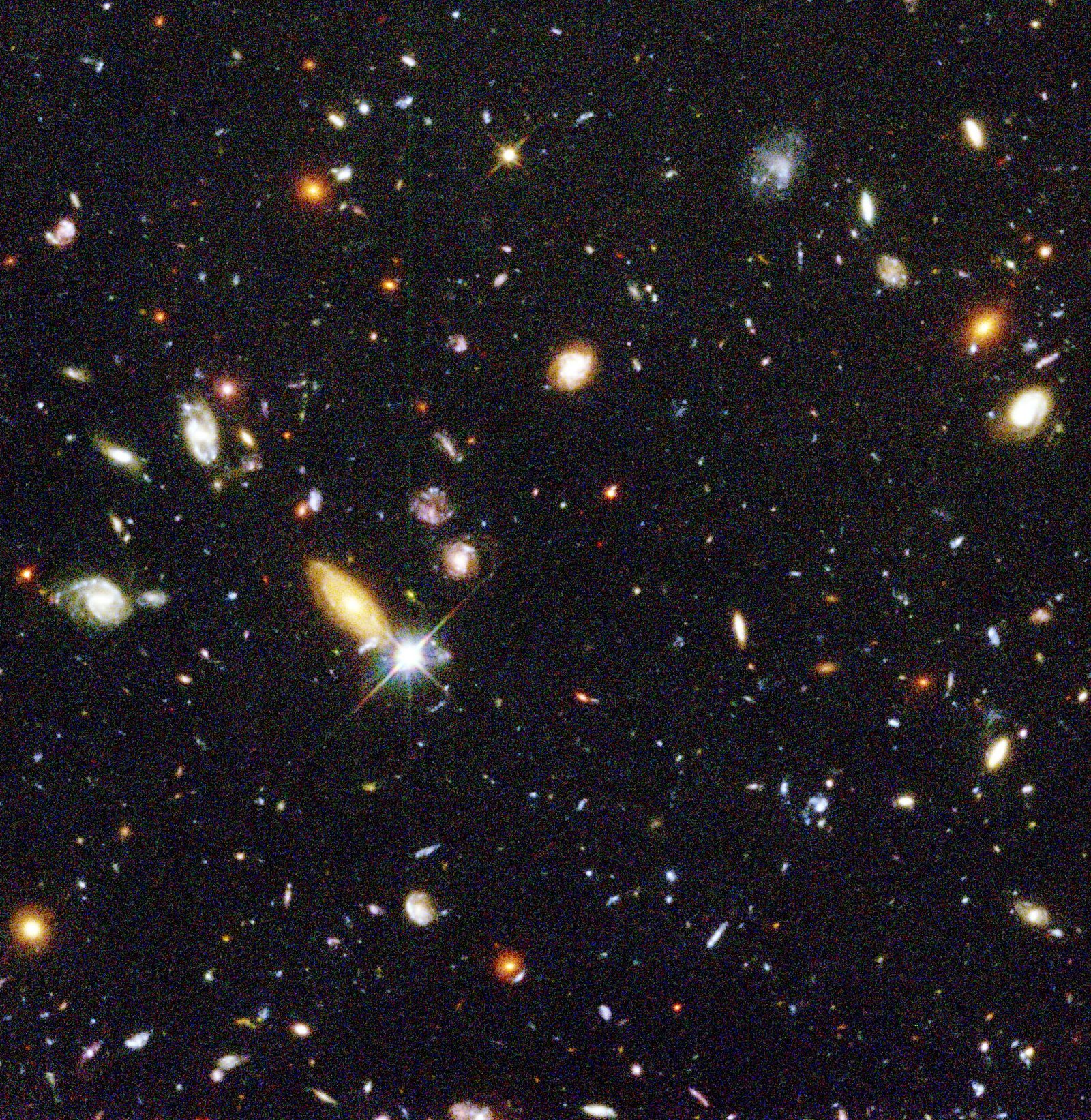
The investigation was conducted under the Galaxies Losing Oxygen via Winds project, known as GLOW, with support from the National Science Foundation. Researchers examined small galaxies containing anywhere from a few thousand to hundreds of millions of stars and found far less oxygen remaining inside them than theoretical simulations predicted.
Grace Telford, study co-investigator and assistant professor of physics and astronomy at the University of Utah, explained that stars manufacture oxygen deep within galactic interiors. Because the element must have existed inside those systems in the past, only immense energy from massive stars and supernova blasts could have ejected it into intergalactic space.
Why Astronomers Trace Oxygen Across Space
After hydrogen and helium, oxygen is the third most abundant chemical element in the cosmos. Because its atomic signature is relatively straightforward to measure and its stellar production rate is well established, astronomers rely on oxygen as a primary benchmark for tracking how heavy metals circulate through space.
Principal investigator Kristen Wingfield McQuinn, an associate professor at Rutgers University and mission head of the Science Operations Center for the Nancy Grace Roman Space Telescope in Baltimore, noted that mapping oxygen reveals how galaxies evolve. Tracking what fraction remains inside stars and interstellar gas versus what escapes shows how small systems enrich the intergalactic medium.
To build a complete chemical inventory across all 37 dwarf systems, including the starburst galaxy NGC 4449 located in the constellation Canes Venatici, the team combined multi-observatory datasets:
- Archival high-resolution optical imaging to resolve individual stars and reconstruct long-term star-formation histories.
- Infrared observations from the retired Spitzer Space Telescope to account for warm dust and total stellar mass.
- Radio measurements from the Very Large Array and the Australian Telescope Compact Array to map surrounding neutral hydrogen gas.
Comparing Low-Mass Systems to Larger Galaxies
While a 2014 study showed that Milky Way-sized galaxies lose a substantial share of their oxygen into surrounding gas haloes called the circumgalactic medium, smaller dwarf galaxies have weaker gravitational pull. Consequently, supernova-driven galactic winds expel heavy elements much more efficiently from low-mass systems than standard cosmological models previously assumed.
These 37 targets were specifically chosen because they lie close enough to Earth for optical instruments to resolve individual stars—a capability impossible for more distant dwarf systems. Still, astronomers are working to determine whether the missing oxygen lingers in outer circumgalactic haloes or escapes completely into deep intergalactic space.
Future Surveys With Next-Generation Space Telescopes
Building on the GLOW findings, McQuinn has secured an approved observing program on the newly launched Nancy Grace Roman Space Telescope to identify even fainter, lower-mass dwarf galaxies across wide swaths of the sky. Follow-up observations with the James Webb Space Telescope will then probe their ancient stellar populations in detail.
Meanwhile, Telford is conducting high-resolution observations of individual massive stars inside nearby GLOW galaxies to measure how low-metallicity stars drive such powerful outflows. As covered in our Top News reports on space science, these multi-telescope campaigns are reshaping how astrophysicists model the chemical evolution of the universe.